
With the inception of additive manufacturing technology, the trend of rapid prototyping is growing across industries. From automotive to construction, consumer products, and aerospace, prototyping is helping companies in a multifaceted way.
Using quick prototyping methods, engineers can visualize the actual product and its functionality without initiating the expensive manufacturing process. As 3d printers and 3D printing services are easily accessible, individuals can test multiple design profiles at affordable cost.
If you also plan to try your hands-on prototyping to turn your idea into a product, we have you covered. Here are some quick practical ways that you can follow to hone your prototyping skills.
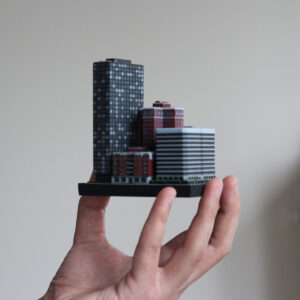
Powerful prototyping tips that leads to excellent product design
Whether you plan to print a functional prototype or a solid 3d model to demonstrate your ideal, these tips will help you refine the end product with ease.
1. Plan out the design process
Additive manufacturing eases the design and prototyping process, but you need to have a robust design plan first. You need to brainstorm a thorough plan which will include product dimension planning, figuring out ideal materials, needed 3d printing method, and more.
By planning these essential things, you can experience a smoother prototyping process rather than meeting surprises. Depending on the complexity, you also need to think about whether you will do the prototyping or outsource it to a professional company.
For yielding excellent results, do a preliminary prototyping result and search for existing similar models that you are going to print. By doing this, you can explore how others have done the prototyping and also check for prototyping challenges. You will find many similar 3d models online that you can use in your initial research for designing the model.
2. Prototype quality
From the beginning of the design communication, your focus should be on deriving a quality design and end product. Digital strategies and the 3d printing process are essential, but product quality comes on top of them. For ensuring excellent prototype and final product quality, do comprehensive research on 3d printing materials and their durability.
Be it a static representation model or a functional prototype, emphasizing quality from the beginning will help you make the manufacturing process more robust. There are hundreds of 3d printing materials available, and companies also offer options for bespoke-made materials. Instead of going with the most popular materials, do your research to find the right fit for your product.
When you focus on overall build quality, you can visualize the product and its surface finishes in a more detailed manner. To ensure you achieve excellent product quality, you have to refine the 3D CAD model.
3. Functionality of prototype
Functionality reflects how the product will perform in a real-world environment. By functionality, you need to think about how well the product will solve the customers’ problem or make their lives more productive. If you are not printing a static model, functionality becomes an inevitable priority. How the product will perform comes top of the overall aesthetics and visual appeal.
Depending on the purpose of the functional prototype, you need to test the design against multiple test cases. In-depth testing reduces the chances of product failure in real-world scenarios and saves substantial capital and efforts.
If you are printing a large part, the best way to prototype is to follow an isolated profile approach. In this process, you don’t have to print the complete prototype at once. Instead of this, first, identify which are the most complex parts that will require multiple iterations. Once you master the complicated geometries, prototyping the rest of the design becomes easy.
4. Think about design reusability
Reusability is a critical concept while working with 3d printing techniques to build your prototype. When you design the model with reusability, it will save you substantial time in future iterations.
Reusability brings more agility to the prototyping and product development process. With a reusable design, you can prepare multiple 3D CAD iterations without designing them from scratch. You will find various guides on improving the agility factor of the model depending on what you plan to prepare using 3d printing.
5. Testing the prototype
Once you complete the designing, prototyping phase, it’s time to move towards iterative testing of the model to eliminate all aesthetical and technical shortcomings. You can consider some key testing factors: the dimensions, surface finishing, overhang quality, and ergonomics of the prototype.
It happens pretty often that the difference between the CAD model and the final prototype is significant in size and aesthetics. First, it is essential to test the CAD digital model’s every element with great attention to eliminating such scenarios. Move ahead with the printing only when you checked the digital model against multiple cases.
Final Thoughts
Product prototyping is a critical aspect of product development, and with 3d printing, the process becomes seamless. Follow these above tips to refine the result and mitigate the structural flaws in the main product. You can also opt for a professional 3d printing service company to speed up the prototyping process and get high-quality output.
About 3D Spectra Technologies LLP
3D Spectra Technologies LLP is a pioneer 3d printing company that offers a complete range of industrial additive manufacturing services. Along with bespoke 3d printing, we provide 3d scanning, CAD services, vacuum casting, AR development and more to meet your every manufacturing requirement.