
3D printing or additive manufacturing is transforming several industries. Compared to conventional methods, this technology is more agile, flexible, and innovative. This advancement becomes more popular with the advent of plastic 3d printing.
Previously, additive manufacturing was limited to industrial use and expensive personalisation; however, things are changing now. Technologies like FDM have made 3d printing mainstream among small-scale companies and hobbyists. If you are new to this innovation, this plastic 3d printing Ebook will help you get started.
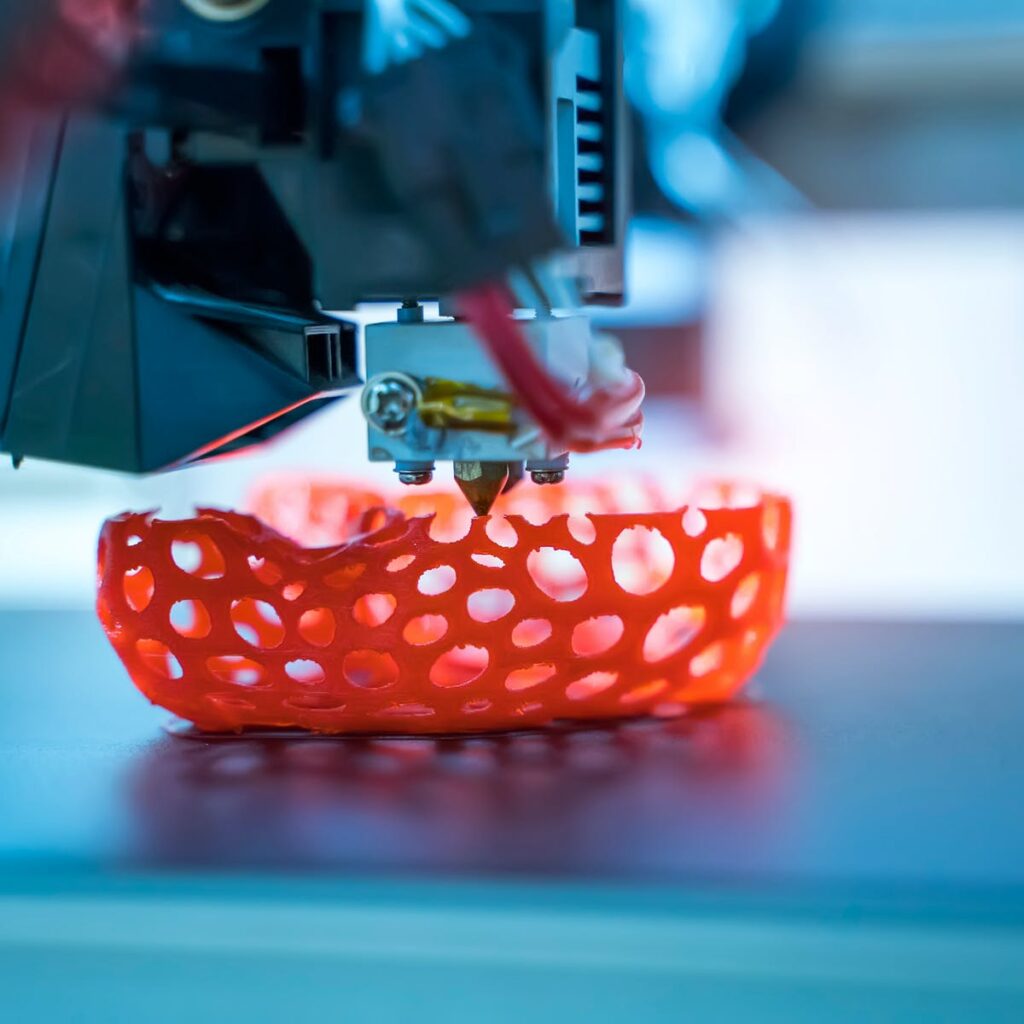
Image Credit: Google
What is plastic 3d printing?
Plastic 3d printing is the process of making three dimensional solid objects from a digital file. The technology includes melting, shaping, and hardening materials in layers to create an object in real-time. It has gained traction among industries because it can produce complex shapes within no time.
The working principles are similar to conventional ink printers, which use different colours to create pictures. However, instead of ink cartridges, plastic 3D printers use material cartridges to fill models or support structures and binder solutions. A nozzle or extruder head melts plastic materials into liquid form then deposits them onto the base layer through plastic extrusions. After completing one layer, the machine will rise by one level and start building another layer consecutively. There are four popular 3d printing methods available in the market:
Fused Deposition Modeling (FDM)
It’s among the most popular technologies used at a consumer level. The maximum build volume of this technology is 300x300x300mm. FDM technology offers a wall thickness of 1mm and a hole size of 2mm. Popular materials used in FDM are PLA and ABS, as they are flexible and robust.
Selective laser sintering (SLS)
SLS technology is ideal for both industrial and personal prototyping purposes. SLS 3d printers use an intense laser that fuses polymer powder’s particles to create an object. The maximum build volume of SLS technology is 340 mm x 340 mm x 600 mm. In addition, this offers a wall thickness of 0.8mm. The standard material used in SLS is Nylon.
Stereolithography (SLA)
It’s a commonly-used 3d printing technology that offers a large build volume of 650x650x450mm. With a wall thickness of around 0.8mm and a hole size of 0.8, this technology provides average surface finishing. Some common materials used in SLA technology are different types of resins.
Multi Jet Fusion (MJF)
MJF 3D printing uses fine-textured PA 12 material to create solid and flexible components. This technology offers a build volume of 256x340x360mm with a wall thickness of 0.8 mm. In addition, the MJF method offers a hole size of 0.8mm.
| Features | SLS | FDM | SLA | MJF |
| Minimum Wall thickness | 0.8mm | 1mm | 0.6mm | 0.8mm |
| Maximum Build Volume | 340 mm x 340 mm x 600 mm | 1000x1000x1000 mm | 650x650x450mm | 256x340x360mm |
| Surface Finishing | Average | Rough | Smooth | Average |
| Min. Holes | 0.8mm | 2mm | 0.8mm | 0.8mm |
| Accuracy | 0.15 | 0.5 | 0.1 | 0.15 |
| Mechanical property | Flexible & strong | Flexible & strong | Strong & brittle | Strong & flexible |
| Material | PA/Nylon | PLA & ABS | Resins | PA12 |
Benefits of using plastic 3d printing
Below are some cutting-edge benefits of leveraging plastic 3d printing technology in the manufacturing industry:
- Compared to the conventional manufacturing methods, 3d printing is highly cost-effective as the material wastage is lower. There are no additional production costs involved in producing complex geometrical shapes.
- It is efficient to leverage additive manufacturing for high volume products with zero tooling or injection moulds from a product design perspective.
- This technology speeds up the entire process of manufacturing by reducing iterations and time-to-market. Moreover, the lightweight nature of 3D printed plastic parts reduces freight cost further.
- It is possible to introduce variation in size, function, style, aesthetics, and colour in a single product with additive manufacturing techniques. This approach renders customisation according to individual needs without incurring significant development costs.
- As there are no set rules for 3d printing technology, even small companies can invest in R&D activities involving rapid prototyping without any hassles.
Industries using plastic 3d printing
Several industries have started using additive manufacturing technology to speed up their manufacturing and cater to customers’ personalisation requirements. Major sectors utilising this technology are:
Automotive
The automotive industry has started using additive manufacturing for its prototyping and production needs. It reduces the lead time to create prototypes by 80% compared to conventional methods. In addition, car manufacturers are using 3D printing to create a variety of accessories, including prototype parts, seat moulds, and wheel covers.
Medical
Plastic 3D printing has transformed the medical industry with its high-quality prosthetics and surgical tools. Prosthetic manufacturers are using this technology to create precise yet affordable implants that perfectly fit an individual’s body. In addition, doctors are using CST files from MRI scans of patients’ bodies to operate implants accurately.
Consumer products
Major companies across the world are using 3d printing machines to personalise their products. For instance, several shoe-making companies are using plastic 3d printers to create customised sports gear. In addition, several brands are also using this technology for their eyewear products, where customers can select various colours and shapes before purchasing.
Education
Plastic 3D printers are helpful in the educational environment to teach students about digital designing and fabrication processes. Educators can share complex designs with their students by using this technology, which could be difficult through traditional methods. In addition, they can create customised learning aids for students with special needs. Compared to conventional audio-visual resources, 3d printing is more interactive and informative.
Electronics
3d printing is also helping the electronics industry to create custom-designed parts. These printed circuit boards, sensors, and tools are widely used in several industries, including aerospace engineering. In addition, with the help of 3d printers, several companies are using new digital fabrication processes with less waste.
How 3D Spectra Technologies LLP helps manufacturers
We are a leading plastic 3d printing company that offers full-fledged additive manufacturing services. Our services help manufacturers grow their business and thrive on higher profitability:
- We reduce the company’s manufacturing overhead and offer high-quality products at less costing.
- 3D Spectra Technologies LLP offers a faster turnaround time that helps companies launch their products faster and reach more customers.
- Manufacturers have the option to pick from a wide range of materials and 3d printing technologies to meet their product requirements.
- With years of experience in additive manufacturing, our team conducts intricate QA practices to ensure you get excellent products.
- We offer Pan India and international shipping, so manufacturers don’t need to worry about shipping and logistics.