
Innovations in 3D printing are revolutionising how companies approach manufacturing and prototyping. Designers, engineers, and other professionals are integrating 3D printing technology into workflows throughout development cycles as it becomes more widely available and more reasonably priced. In this blog post, we’ll quickly have a glance at SLA and SLS printing as well as some of their unique features and uses.
What is SLA and SLS Printing?
Stereolithography is one of the widely used additive manufacturing techniques that belongs to the family of vat photopolymerization. These techniques are all based on the same concept: employing a light source—a laser—to convert liquid resin into rigid plastic. The placement of essential parts like the resin tank, build platform, and light source is what distinguishes one product from another physically. In addition, SLA is one of the vat photopolymerization techniques that is most frequently used in order to create or manufacture products in desired shapes and sizes. A polymer resin is selectively cured using an ultraviolet (UV) laser beam, layer by layer, to produce desired components or objects.
Selective Laser Sintering is one of the additive manufacturing processes that belongs to the family of Powder Bed Fusion. In selective laser sintering (SLS) 3D printing, a laser joins polymer powder particles to create a product layer-by-layer. SLS 3D printing is used for both small production runs and the creation of useful polymer parts. SLS 3D printing has long been favoured by engineers and manufacturers because of its benefits and efficiency. A few applications where the SLS technology excels are rapid prototyping, small-batch, bridge, and custom manufacturing.
Materials used in SLA and SLS Printing
SLA exclusively employs resins. Whereas, SLS operates with polymers like nylon and polystyrene. The polymers used in SLA printing are pricey and hazardous. A resin print’s post-processing is also dirty, time-consuming, and a little risky because you shouldn’t touch the resin when it’s liquid. In contrast, SLS printing powders are simple to work with. Even though SLS printing is still expensive, removing unwanted objects from a final print is very simple before applying additional post-processing.
Materials employed in SLA Printing
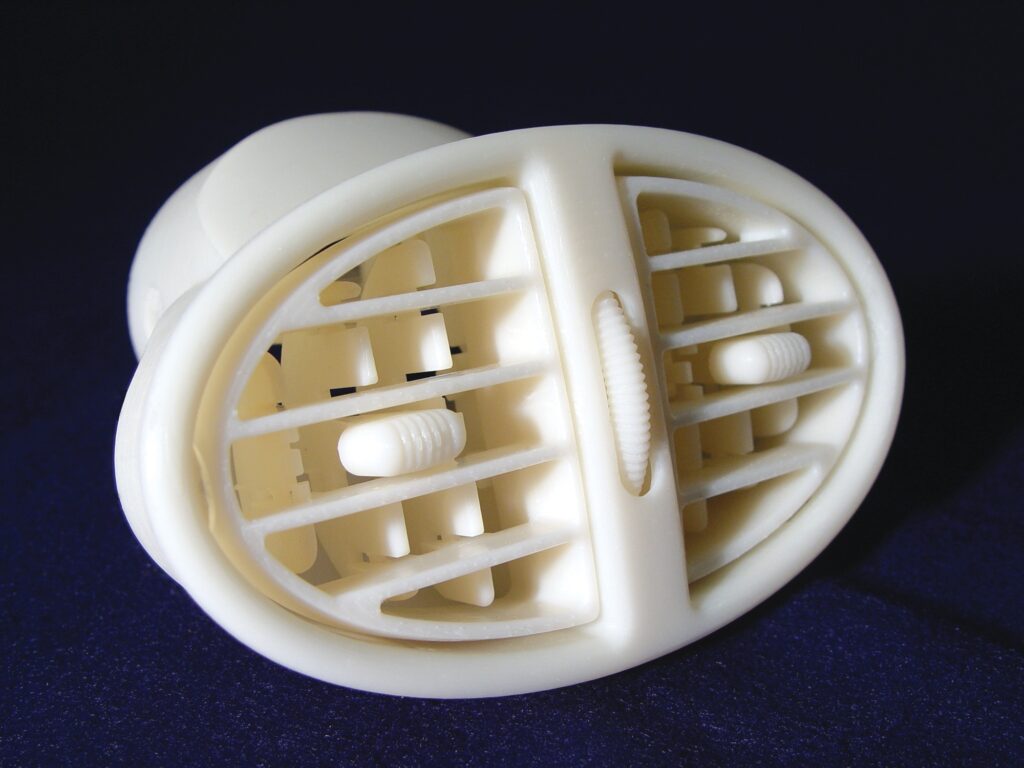
- Standard resin
- Clear resin
- Castable resin
- Dental resin
- Tough resin (ABS-like)
- Durable resin (PP-like)
- Heat resistant resin
- Rubber-like resin (flexible)
- Ceramic filled resin (Rigid)
Materials employed in SLS Printing
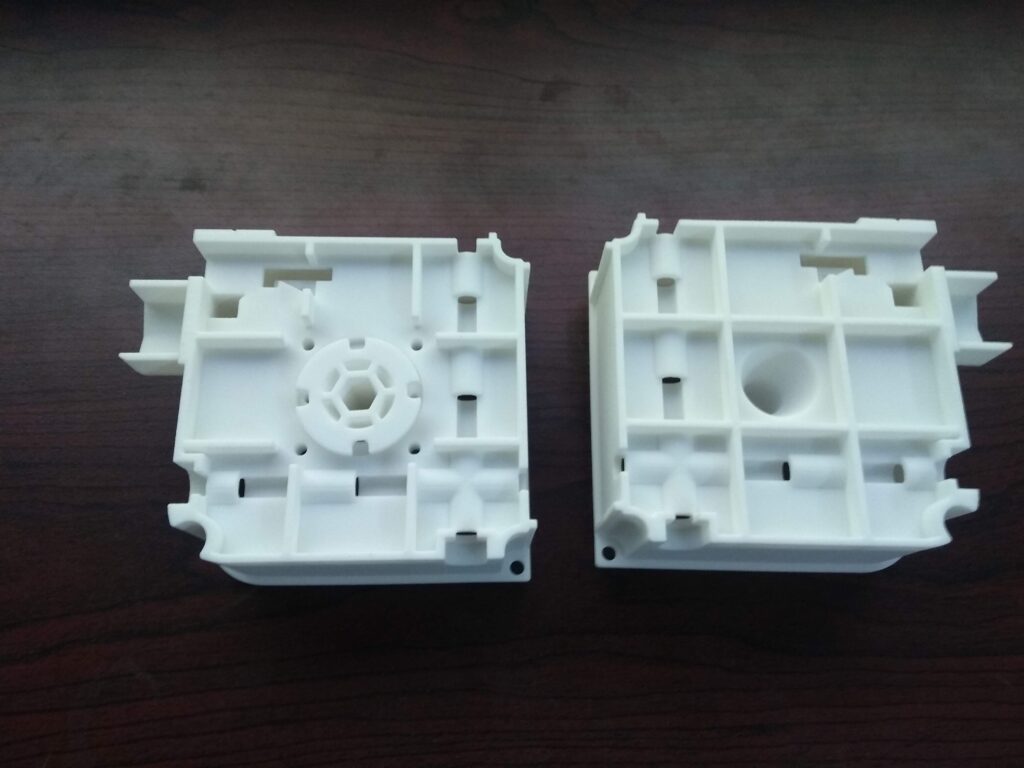
- Polyamide 12 (PA 12)
- Polyamide 11 (PA 11)
- Polycarbonate (PC)
- Ceramics
- Aluminium-filled nylon (Alumide)
- Glass-filled nylon (PA-GF)
- Carbon-fibre filled nylon (PA-FR)
- Polystyrenes (PS)
- Thermoplastic elastomers (TPE)
- Polyaryletherketones (PAEK)
Working of SLA and SLS Printers
How SLA Printing Works?
In the SLA process, the layers of the support structures are initially built up using an ultraviolet laser that is directed at the surface of a liquid thermoset resin. The build platform slides downward and a recoating bar moves across the platform to apply the next layer of resin after the first layer has been imaged onto the resin surface. In the layer by layer manner, the procedure is continued until the construction is finished. In a lab, solvents are used to dissolve any remaining resins once newly constructed pieces have been removed from the machine. The support structures are manually removed after the parts have been thoroughly cleaned. After that, pieces go through a UV-curing cycle to completely firm the part’s exterior. The application of any special or requested finishing is the last stage in the SL process. To prevent deterioration, parts created in SLA should only be utilised in environments with low UV and humidity exposure.
How SLS Printing Works?
In the selective laser sintering process, each layer of the part is started to be sintered by the SLS machine into a hotbed of powder made of nylon. A roller rolls across the bed to disperse the subsequent layer of powder after each layer has bonded. In the layer by layer approach, the printing process is continued until the final product is achieved. When the build is complete, the entire powder bed with the enclosed pieces is carried into a breakout station, where it is hoisted up and the bed’s contents are broken out. A manual initial brushing is used to get rid of most of the loose powder. Prior to being sent to the finishing department, parts are bead blasted to eliminate any last bits of residual powder.
Applications of SLA and SLS Printing
Applications of SLA
SLA is frequently used to create parts for a variety of applications, such as massive components, intricately detailed parts, and cosmetic prototypes with a flawless and smooth surface finish. Some of the common applications of SLA are,
- Concept prototypes
- Rapid Tooling, Jigs & Fixtures
- Investment Casting Patterns
- Designer models
- Scale & exhibition models
- Snap-fit assemblies
- Transparent covers Moulds
Applications of SLS
- Complex and durable prototypes
- Snap-fitting components
- Automotive design.
- Aerospace parts and ducting,
- Flame-resistant components
- hoses, seals, and gaskets
- Medical devices
Types of Industries that employs SLA and SLS Printing
Engineering: In the engineering industry, manufacturers optimise production processes and streamline workflows by directly 3D printing unique tools, moulds, and other replacements using the SLS technique. This aids in considerably lower prices and lead times than with traditional manufacturing. As a result, production errors are reduced, assembly is expedited, and labour productivity is increased. Whereas, the SLS printing process is widely used in the product development process, from the initial concept design iteration to the production of finished goods. It is used to carry out rapid prototyping, create functional prototypes, and produce mockups of specific products.
Healthcare: By reducing the risks and uncertainties caused by human factors, digital dentistry improves patient care by ensuring more consistency, accuracy, and precision across the whole workflow. A variety of high-quality, customised goods and appliances with excellent fit and consistent results can be produced with SLA printing techniques at low unit costs. In addition, SLS 3D printing technology is used to produce patient-specific, ready-to-use medical products in-house, including surgical models, instruments, and end-use parts for prosthetic limb replacement and bracing.
Manufacturing: Engineers and product designers can quickly prototype concepts using the SLA printing technique in order to produce the desired engineering components in appropriate quantities or volumes. It is used for manufacturing concept prototypes, investment casting patterns, and on-demand designer models. Manufacturers can utilise the SLS printing process to implement end-use manufacturing, small batch manufacturing, the creation of unique mass-customizable consumer goods, supply chain robustness, and the manufacture of replacement parts Jigs and fixtures that are long-lasting and robust SLS is also used to produce clips and clamps, gears, and specialised automotive or motorcycle parts.
SLA vs SLS – feature comparison
- Resolution: SLA has better resolution than SLS. Three resolution levels are available with the SLA 3D printing service, allowing you to balance cost with the level of detail and surface finish.
- Strength and Durability: Due to the engineering-grade materials used and the fact that they are real thermoplastics that have been sintered, SLS generally produces parts that are more enduring and stronger, when compared to the SLA method.
- Final Product: The appropriateness of parts for various functions is one of the most important comparisons. SLA printers often generate objects with a high level of detail but are fragile and unsuitable for any mechanical applications. On the other hand, SLS printers can produce relatively high-detail pieces in various durable materials, including metal, that are ideal for various mechanical uses.
- Size: SLA printers are typically more compact, making them ideal for desktop use. SLS printers, in contrast, are still only available in “benchtop” variants, which are big and power-hungry. SLS printing has the capacity to make larger models — or even smaller models quickly — than a SLA machine, despite the fact that SLA may be more practical. This is because SLS machines have a larger build area and don’t require support.
- Tolerances: In comparison to SLS, SLA will be able to achieve tighter tolerances.
- Chemical and Heat Resistance: The total heat and chemical resistance of thermoplastic SLS materials will be higher than that of SLA products.
- Post Processing Options: Although there are post-processing choices for both SLS and SLA prints, they are often distinct because the prints vary, but you still obtain some nice surface finishes.
How 3D Spectra helps Industries by offering High-end 3D printing services?
- One Stop Solution: Our skilled staff at 3D Spectra Technologies LLP provides the best and top-notch 3D printing services in Pune, including FDM, SLA, SLS, Metal 3D printing, and more. Everything from bulk production to fast prototyping, we have got you all covered.
- Cutting-edge Services:We offer high-end 3D printing services across various sectors using cutting-edge 3D CAD software and metal 3D printers.
- Rentable 3D Printers: 3d Spectra Technologies LLP also offers rentable 3D printers that are reasonably priced. From a wide range of professional 3D printers, choose the one that best meets your needs and produces top-notch creations.
- Small & Mass Production: Manufacturers can 3D print the needed products in desired volumes using the on-demand mass production services provided by 3D Spectra Technologies LLP. We work closely to meet your production needs and ensure you can take full advantage of 3D printing technology.
- Extensive Material Support: At 3D Spectra Technologies LLP, we provide you with 45+ industrial-grade materials, such as plastic, transparent acrylic, nylon, frosted detail plastic, and more. To match your product specifications, our skilled engineers can develop and produce any complex prototype using the right materials.
- Instant Quote: Our expertise in providing 3D printing as a service with an instant quote facility makes us the go-to solution for 3D printing services. Our specialists will provide you with an instant price after you share your design, select your materials, and provide us with more project information.
Conclusion
Each technology has advantages and disadvantages, and the best choice for the job will depend on the project’s requirements. An SLS Nylon print might be the best option for components or projects that are primarily concerned with functionality. Similarly, SLA printing is the best option when greater quality and appearance are required, and the part needs to be translucent. There is no doubt that these printing techniques offer many more benefits than conventional production processes like injection moulding. Based on your needs, requirements, and business use cases, 3D Spectra Technologies LLP offers high-end 3D printing services with the utmost accuracy. To satisfy all of your design and manufacturing needs, we provide customers with the most precise 3D printing services available in India. Our years of experience in digital manufacturing enable us to fully understand your company’s requirements and give you a competitive edge.